The method.
What Pilates is
Movement starts from a strong center, which Joseph Pilates called the powerhouse, and every exercise is done with control rather than momentum. The breath sets the rhythm. Done well, it strengthens and lengthens the whole body at once.
He called it Contrology. There are hundreds of exercises on the mat and on equipment like the reformer, but a handful you’ll do every time you practice.
Why the order matters
In Return to Life Through Contrology (1945), he set out 34 mat exercises in a fixed sequence. Each one prepares the body for the next: The Hundred warms you up and gets the breath going, the rolling exercises work the spine, and the sequence builds toward the harder work at the end.
That sequence is the backbone of Purrlates, from exercise 1 to 34.
How we teach each exercise
 1
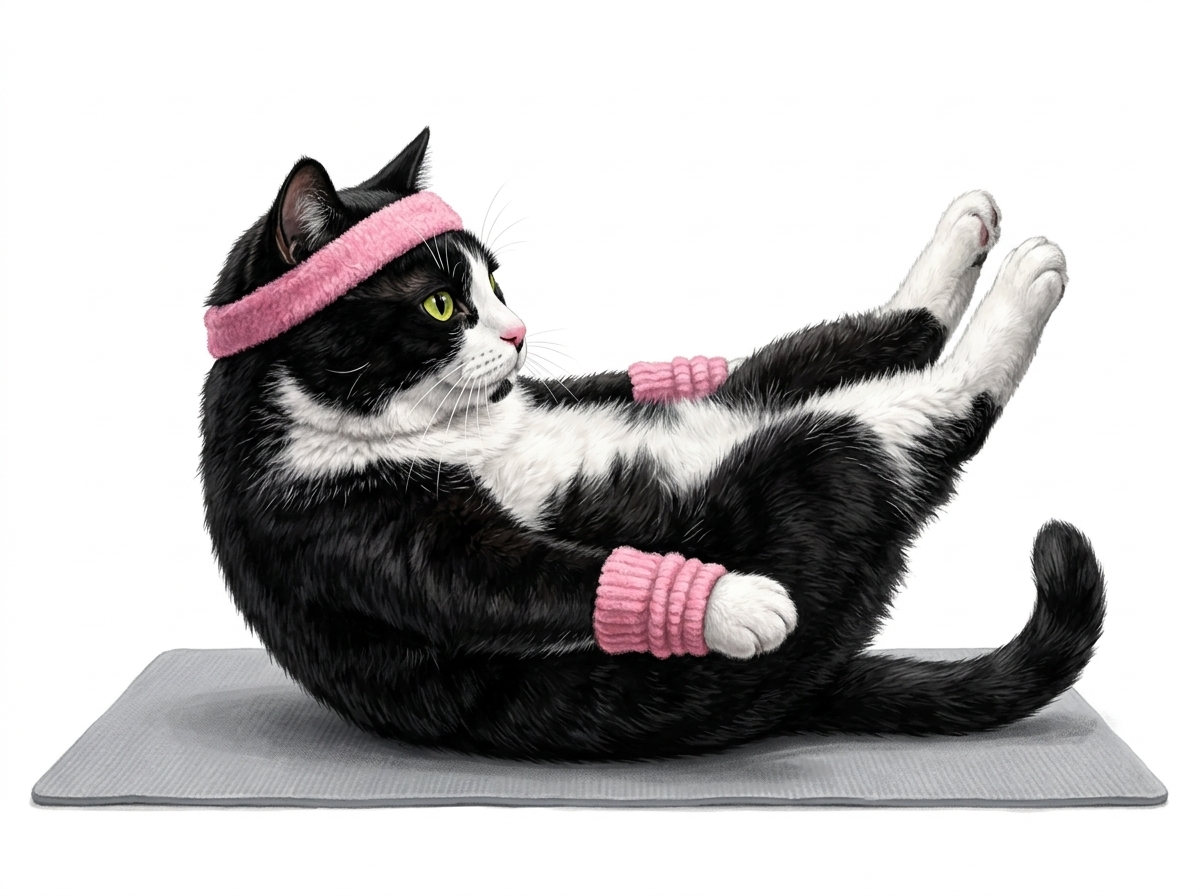
The Hundred
See it
A cat holds the shape of the exercise, so you see the whole movement before you read a word.
Set up
Where to start: how to lie, sit or kneel, and where your arms and legs go.
Move
The movement itself, one clear step at a time.
Breathe
When to breathe in and when to breathe out.
Cues
What to think about while you move: the details that make it work.
Adjust
Easier and harder versions, and cautions for when to skip it or ask a teacher.
Where to start
The Foundations lessons cover breathing, a neutral spine and the first exercises of the mat. From there, the lessons build toward the full sequence and on to Advanced work. Teachers get class plans built on the same exercises.
Pilates is exercise: check with your doctor before starting a new program, especially if you’re pregnant or have an injury, and stop if anything hurts.